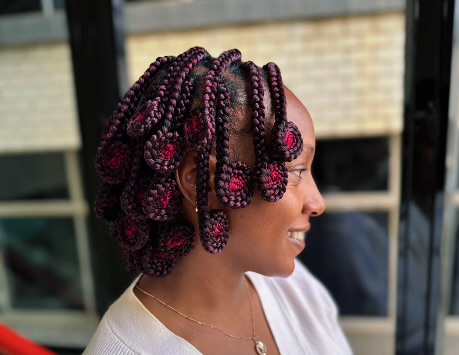
Koroba braids are quickly becoming one of the most talked-about protective styles online. Known for their sculptural appearance, intricate sections, and cultural roots, the braided look has been embraced by beauty lovers seeking a bold yet traditional hairstyle.
But while the style may be visually stunning, experts say not every hair type responds to Koroba braids the same way.
Like many braided styles, Koroba braids can absolutely function as a protective hairstyle when installed and maintained properly. Protective styles are meant to shield the hair from daily manipulation, reduce breakage, and help retain length. However, the key word is “properly.” If the braids are installed too tightly or worn for too long, they can create excessive tension on the scalp and edges.
For people with coily and tightly textured hair, Koroba braids may hold well because denser curl patterns often provide a stronger grip for braided styles. Still, even thicker hair types are not immune to damage. Tight braiding around the hairline or heavy extensions can lead to traction alopecia, a form of hair loss caused by repeated tension on the scalp.
Those with finer natural hair textures may need to be especially cautious. Fine strands are generally more fragile and may not tolerate the pulling required for highly structured braid styles. If your scalp feels sore for days after installation or you notice bumps, redness, or excessive tension around your edges, the style may be too tight for your hair type.
People with chemically treated, color-treated, or heat-damaged hair should also take extra care before getting Koroba braids. Hair that is already weakened tends to be more vulnerable to snapping under tension. In these cases, lightweight braiding hair and looser installation methods may help reduce stress on the strands.
Scalp care is another important factor. Because Koroba braids often involve intricate patterns and longer wear time, keeping the scalp clean and moisturized is essential. Lightweight oils, scalp serums, and gentle cleansing can help prevent dryness and buildup while the style is installed.
Ultimately, a protective style should not leave your scalp throbbing or your hairline struggling to recover. The healthiest version of Koroba braids is one customized to your specific hair density, strength, and scalp sensitivity.
The trend may be beautiful, but healthy hair should always come before aesthetics. Understanding what your hair type can realistically handle is the best way to enjoy Koroba braids without sacrificing the long-term health of your strands.