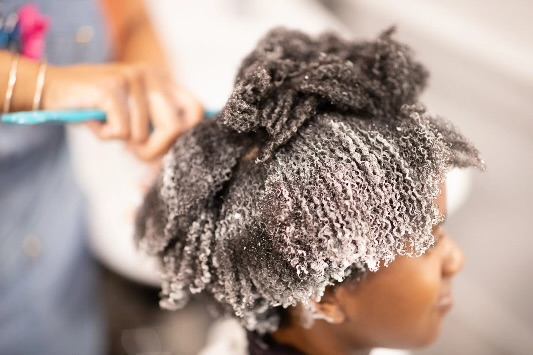
Dry shampoo has become a go-to product in many beauty routines, but its role in natural hair care is often misunderstood.
While it promises quick freshness and oil control, its effects on textured hair require a more careful look, especially for those managing curls, coils, and protective styles.
At its core, dry shampoo is designed to absorb excess oil and refresh the scalp without water. It typically comes in powder or aerosol form and works by coating the hair and scalp to reduce the appearance of grease. For straighter hair textures, this can create a clean, voluminous look between washes. But for natural hair, the story is a bit more complex.
Natural hair tends to be drier than other hair types due to its curl pattern, which makes it harder for scalp oils to travel down the strand. Because of this, overusing dry shampoo can sometimes lead to buildup, leaving the scalp feeling coated or congested rather than refreshed. In some cases, it can even make hair feel dull or less defined if not properly cleansed afterward.
That doesn’t mean dry shampoo has no place in a natural hair routine. Used strategically, it can be helpful, especially in protective styles like braids, twists, or wigs where frequent washing isn’t practical. In these cases, dry shampoo can help reduce odor, absorb excess scalp oil, and extend the life of a style without disturbing it.
The key is knowing when to use it. Dry shampoo works best on day two or three hair when the scalp is slightly oily but not heavily product-laden. It’s also useful in situations where you need a quick refresh before an event or during travel when washing isn’t an option. However, it should never replace regular cleansing. A proper wash routine is still essential for maintaining scalp health and preventing long-term buildup.
Equally important is knowing when to skip it. If your scalp is already dry, itchy, or sensitive, adding dry shampoo can worsen irritation. It’s also not ideal after heavy product use, since layering it over gels, creams, or oils can create residue that’s difficult to remove.
Ultimately, dry shampoo is a tool, not a staple. For natural hair, its value lies in moderation and intention. When used correctly, it can offer convenience and freshness. But the foundation of healthy hair will always come back to proper cleansing, moisture balance, and listening to what your strands actually need.