Noticing more hair in your comb, shower drain or on your pillow can be unsettling, especially when your hair has always been one of your favourite forms of self-expression. While shedding can happen for many reasons, hormonal changes associated with early menopause can sometimes play a role in hair thinning.
For Black women, recognising the connection can be particularly important because hair loss may initially be blamed on protective styles, extensions, chemical treatments or everyday styling practices. However, changes happening inside the body can also affect the hair cycle.
How menopause can affect your hair
As oestrogen levels decline during perimenopause and menopause, the hair-growth cycle can change. Some women may notice that their hair grows more slowly, feels finer or becomes less dense. Increased shedding can also become noticeable.
When these changes happen earlier than expected, they can be especially confusing. Menopause typically occurs between ages 45 and 55, while menopause before 45 is considered early menopause. Menopause before 40 is generally classified as premature menopause.
Other symptoms may provide clues that hormonal changes are involved. These can include irregular periods, hot flashes, night sweats, sleep changes, mood changes and vaginal dryness. Experiencing hair changes alongside several of these symptoms may be a reason to speak with a healthcare professional.
Don’t overlook other causes of hair loss
Early menopause is only one possible explanation for increased shedding. Stress, nutritional deficiencies, thyroid problems, certain medications and hormonal conditions can also contribute to hair loss.
This is why it is important not to assume that every change in your hair is simply a result of ageing or menopause.
Pay attention to changes in your hair
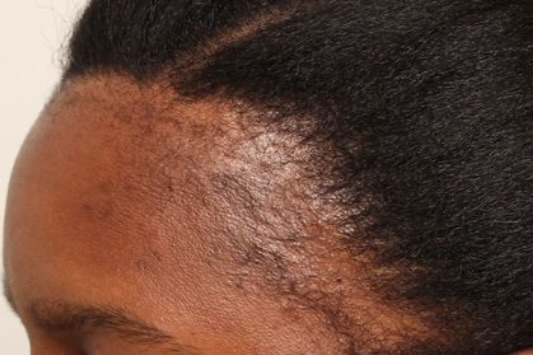
If your normally full hair suddenly becomes noticeably thinner, your part appears wider or you are experiencing persistent shedding, take note of when the changes started. Looking at your menstrual cycle and other symptoms at the same time can provide useful information when speaking with a doctor or dermatologist.
A healthcare professional can help determine whether hormonal changes, a scalp condition, nutrition or another underlying issue may be contributing to the problem.
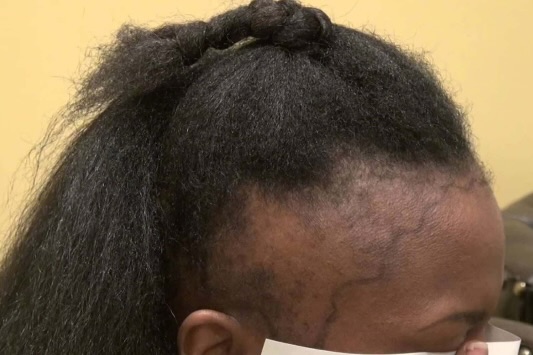
For Black women, understanding the possible relationship between hormones and hair can encourage earlier conversations about changes that might otherwise be dismissed. Your hair is often giving you clues about what is happening beneath the surface, so persistent or sudden changes deserve attention rather than being written off as normal shedding.
How do I solve this? #hair #haircut #hairstyle #howto #myhairportal #shorts #africa #salon # #myhair