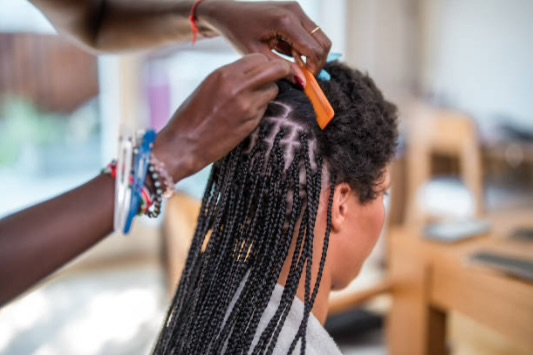
Braids are a go-to protective style for many Black women, offering versatility, convenience and a break from daily styling. However, the excitement of getting a fresh set can quickly disappear when your scalp starts itching, burning or feeling unusually uncomfortable. While tight installation and poor scalp care can contribute to irritation, the braiding hair itself may also be part of the problem. Increasingly, attention is turning towards non-toxic and scalp-friendly braiding hair alternatives that make protective styling more comfortable.
Why does braiding hair make your scalp itch?
Many conventional synthetic braiding extensions are made from materials such as kanekalon and toyokalon. Although these fibres are widely used because they are lightweight, affordable and easy to manipulate, some products undergo chemical processing during manufacturing.
What makes braiding hair non-toxic?
Non-toxic braiding hair generally refers to extensions manufactured without certain potentially irritating chemicals or unnecessary treatments. Some brands offer products marketed as chemical-free, hypoallergenic, plant-based or free from irritating alkaline coatings.
However, these descriptions are not interchangeable, and there is no universal certification that guarantees a braiding extension is completely non-toxic. Always check the manufacturer’s ingredient information, material composition and processing details rather than relying entirely on marketing claims.
Look for scalp-friendly alternatives
If conventional synthetic extensions regularly irritate your scalp, consider exploring alternative products.
- Pre-washed synthetic braiding hair: Some manufacturers offer extensions that have been treated to remove potentially irritating surface residues. Look for clear information about the cleaning process.
- Human hair extensions: These can offer a softer, more natural alternative, although processing treatments and coatings may still cause reactions in sensitive individuals.
- Plant-based braiding hair: Some newer products use plant-derived fibres or biodegradable materials. Check their composition and suitability for your preferred braiding technique.
Should you wash your braiding hair before installation?
If you are using conventional synthetic extensions, some hairstylists recommend soaking them in diluted apple cider vinegar before installation to help remove alkaline surface coatings. However, this method is not scientifically established as a reliable way to eliminate every irritant.
Follow the manufacturer’s care instructions, rinse thoroughly when appropriate and allow the extensions to dry completely before installation. Avoid using products that may leave irritating residues.

Protect your scalp beyond the extensions
Even the gentlest braiding hair cannot compensate for excessively tight installation. Ask your stylist to avoid unnecessary tension, particularly around your edges and hairline. Keep your scalp clean, avoid excessive product buildup and remove your braids if you experience persistent burning, swelling or significant irritation.
Ultimately, comfortable protective styling starts with informed choices. Choosing suitable braiding hair, understanding your scalp’s sensitivities and prioritizing gentle installation can help you enjoy your favorite styles without unnecessary discomfort.