Watching your natural hair get longer can feel like a major achievement, but length alone does not always tell the full story. Your hair may be growing from the roots while experiencing breakage along the strands, making it difficult to retain length. For Black women with natural curls and coils, understanding the difference between hair growth and length retention is essential to building a routine that supports healthier, stronger hair.
Instead of relying exclusively on occasional length checks, pay attention to your hair’s strength, shedding patterns, moisture levels, and overall condition.
1. Check your length retention
One simple way to monitor hair growth is to measure a small section of your hair periodically. Choose the same area each time, gently stretch the strand without pulling, and record its length.
Remember that shrinkage can make natural hair appear shorter than it actually is. Comparing measurements under similar conditions will give you a more reliable picture of progress.
2. Pay attention to breakage and shedding
Hair naturally sheds as part of its growth cycle. Finding some strands in your comb or during wash day is normal, but excessive breakage deserves attention.
Shedding usually involves full-length strands, sometimes with a small bulb at one end, while breakage produces shorter pieces of varying lengths. Frequent breakage may indicate dryness, excessive heat, rough detangling, chemical damage, or tension from hairstyles.
If you notice sudden shedding, thinning patches, or a widening part, consider consulting a dermatologist rather than relying on home tests.
3. Assess your hair’s strength and elasticity
Healthy hair should have some flexibility, although the amount varies depending on texture, condition, and treatment history. When detangling, notice whether your strands snap easily or withstand gentle handling.
You can observe how your hair responds to water and styling without repeatedly stretching individual strands. Excessive pulling to test elasticity can cause damage.
If your hair feels unusually brittle or breaks easily, review your conditioning routine, heat use, and styling habits.
4. Examine your scalp
Healthy hair care begins with paying attention to the scalp. Look for persistent flakes, redness, irritation, tenderness, or excessive oiliness. These signs may indicate that your scalp needs a different cleansing routine or professional assessment.
Regular cleansing, gentle handling, and avoiding hairstyles that pull tightly at the roots can support scalp health.
5. Track your progress consistently
Take photographs of your hair every few months under similar lighting and styling conditions. Record your wash-day routine, products, protective styles, and any noticeable changes in shedding or breakage.
Ultimately, healthy natural hair is not measured by length alone. Stronger strands, manageable breakage, a comfortable scalp, and consistent length retention are better indicators that your routine is working.
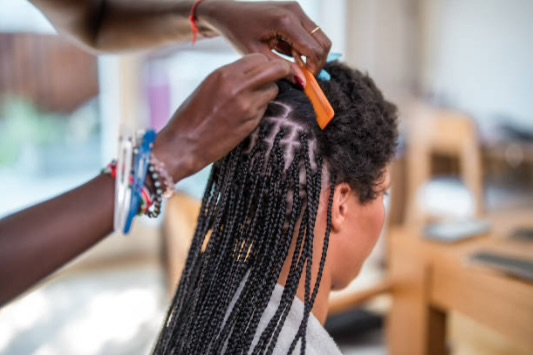
Hair treatment and cornrows #myhairportal #howto #shorts #hairstyle #haircare #haircut #africa #hair