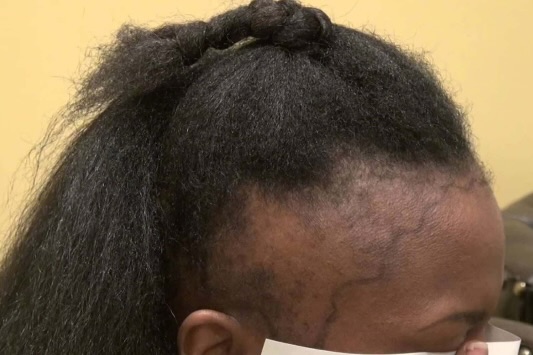
Hair shedding in your 30s is often brushed off as stress, overstyling, or product buildup. But for many women, particularly Black women, there may be a deeper, less discussed cause: early menopause.
Also known as premature menopause, this condition occurs when ovarian function declines before the age of 40, triggering hormonal shifts that can quietly impact everything from mood to metabolism, and, notably, hair health.
Hair growth is closely tied to hormones, especially estrogen. When estrogen levels drop, as they do during menopause, the hair growth cycle shortens. Strands may become thinner, grow more slowly, and shed more easily. At the same time, androgens (often referred to as male hormones) can have a stronger effect, contributing to hair thinning around the crown or edges. This hormonal imbalance can mimic or overlap with conditions like androgenetic alopecia, making it easy to misidentify the root cause.
For Black women, the conversation is even more urgent. Studies suggest they may experience earlier onset of menopause compared to other groups, yet the signs are frequently overlooked or misdiagnosed. Hair loss, in particular, is often attributed solely to protective styling practices, traction, or product use. While these factors can play a role, they don’t always tell the full story.
What makes early menopause especially tricky is that hair loss may appear before more widely recognized symptoms like hot flashes or irregular periods. This delay can lead women to focus on external fixes, switching products, reducing heat styling, or trying new growth treatments, without addressing the underlying hormonal shift.
Understanding the connection between hair loss and early menopause is key to finding effective solutions. Medical evaluation, including hormone testing, can provide clarity. Treatments may involve hormone therapy, lifestyle adjustments, or targeted hair care approaches that support scalp health and minimize breakage. Ingredients that promote circulation and gentle handling techniques can help maintain the integrity of existing hair while underlying issues are addressed.
Equally important is shifting the narrative. Hair loss is not always a surface-level issue, and it shouldn’t be dismissed as a cosmetic concern alone. It can be a signal from the body that something deeper is happening.
By recognizing early menopause as a potential factor, women are better equipped to advocate for themselves, seek appropriate care, and approach hair health from a more informed, holistic perspective, one that goes beyond stress and styling to address the full picture.